
The Clean Rectangle Under Your Sofa Is Trying to Tell You Something
WEDNESDAY, OCTOBER 28, 2026
Moving a sofa can feel like uncovering a time capsule.
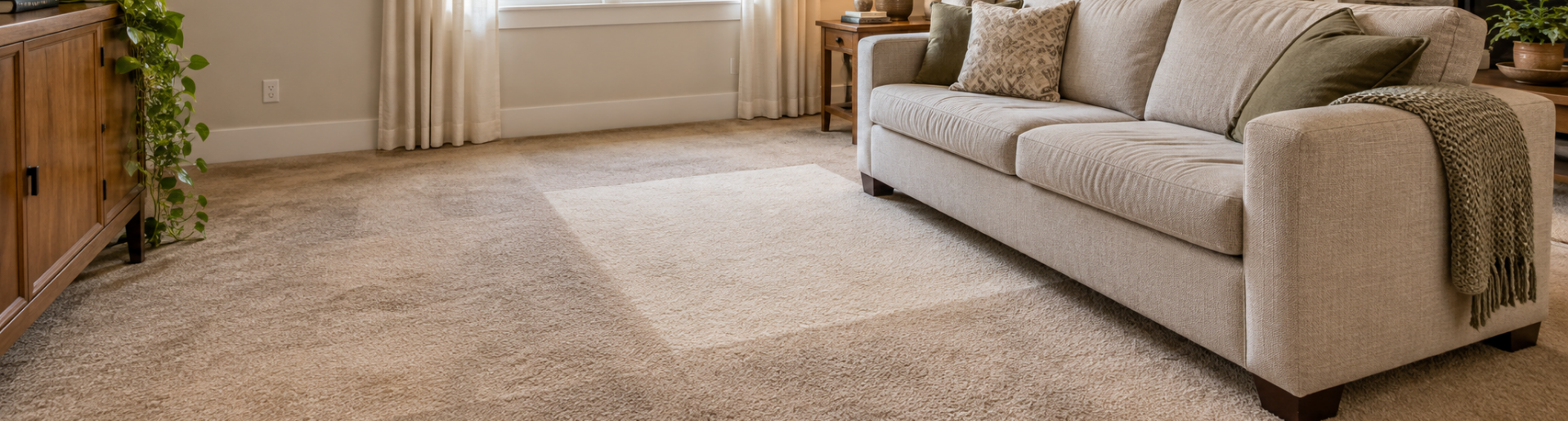
The carpet underneath may look brighter, softer, and noticeably different from the exposed carpet around it. You might see a perfect outline showing exactly where the furniture sat, even if the room never seemed particularly dirty.
That clean-looking rectangle is not just an odd mark. It can reveal how foot traffic, sunlight, spills, and everyday use have gradually changed the rest of your carpet.
Carpet Changes Slowly
Most changes in carpet happen too gradually to notice from one day to the next. You become accustomed to the way a room looks, so darkened walkways and flattened fibers may blend into the background.
Moving furniture creates an immediate comparison. The covered carpet has received little foot traffic and limited exposure to sunlight, shoes, pet paws, food, and daily activity. The surrounding carpet has experienced all of it.
The contrast can make years of gradual change visible in a matter of seconds.
Why Busy Walkways Look Darker
People tend to follow the same paths through a room. They walk from the doorway to the sofa, around the coffee table, or between the living room and kitchen.
Small particles carried by shoes, socks, and pet paws can settle between carpet fibers along these routes. Natural oils and residue from personal care products may also transfer to the carpet.
Vacuuming regularly removes loose material, but particles that settle deeper can become more difficult to collect. Over time, these heavily traveled areas may look darker than the carpet beneath furniture.
Flattened Fibers Affect the Appearance
The difference may not be entirely about color. Carpet fibers can bend and compress after repeated use.
Flattened fibers reflect light differently from upright fibers, which can make a traffic lane appear darker even when discoloration is limited. Furniture weight can also leave dents where legs or bases are pressed into the carpet.
Vacuuming slowly in multiple directions may help lift some compressed fibers. For furniture dents, follow the carpet manufacturer’s care instructions before trying a household method. Certain materials respond differently to moisture, heat, and agitation.
Professional cleaning may improve the overall appearance, but permanent wear cannot always be reversed.
Sunlight Can Create Uneven Color
Furniture shields sections of carpet from direct light. Exposed areas near windows may gradually fade while covered sections retain more of their original color.
This difference may become obvious after moving a large sofa, rug, or entertainment center. Professional cleaning can remove soil, but it cannot restore color that has changed because of prolonged light exposure.
Curtains, blinds, and window coverings can help limit exposure during the brightest part of the day. Occasionally adjusting furniture may also help prevent one section from remaining covered for many years.
Household Products Can Leave Residue
A carpet may also look uneven if spills have been treated repeatedly with household products.
Using too much product or failing to remove it fully can leave residue behind. That residue may attract new soil, causing treated areas to darken again. Scrubbing can also spread a spot or alter the texture of the fibers.
When a mark continues to return, adding another product may make it more difficult to treat. A carpet professional can evaluate the area and consider what caused the spot, which products were previously applied, and whether material may remain below the surface.
Should You Rearrange Furniture Before Cleaning?
Moving smaller items can give a carpet cleaner better access to commonly used areas. However, large or fragile furniture may need to remain in place.
Before your appointment, ask your local Chem-Dry which items should be moved. Removing toys, floor lamps, baskets, and other lightweight objects can help prepare the room. Point out recurring spots, furniture marks, and areas where the carpet looks noticeably different.
Chem-Dry uses Hot Carbonating Extraction to lift dirt and grime from carpet fibers with the power of carbonation. The process uses less water than traditional steam-cleaning methods, helping carpets dry more quickly.
The rectangle beneath your sofa offers a glimpse of how your carpet looked before years of daily life passed over it. If moving furniture reveals dark pathways, recurring spots, or a major difference in appearance, call your local Chem-Dry to request professional carpet cleaning.
BACK TO BLOGS